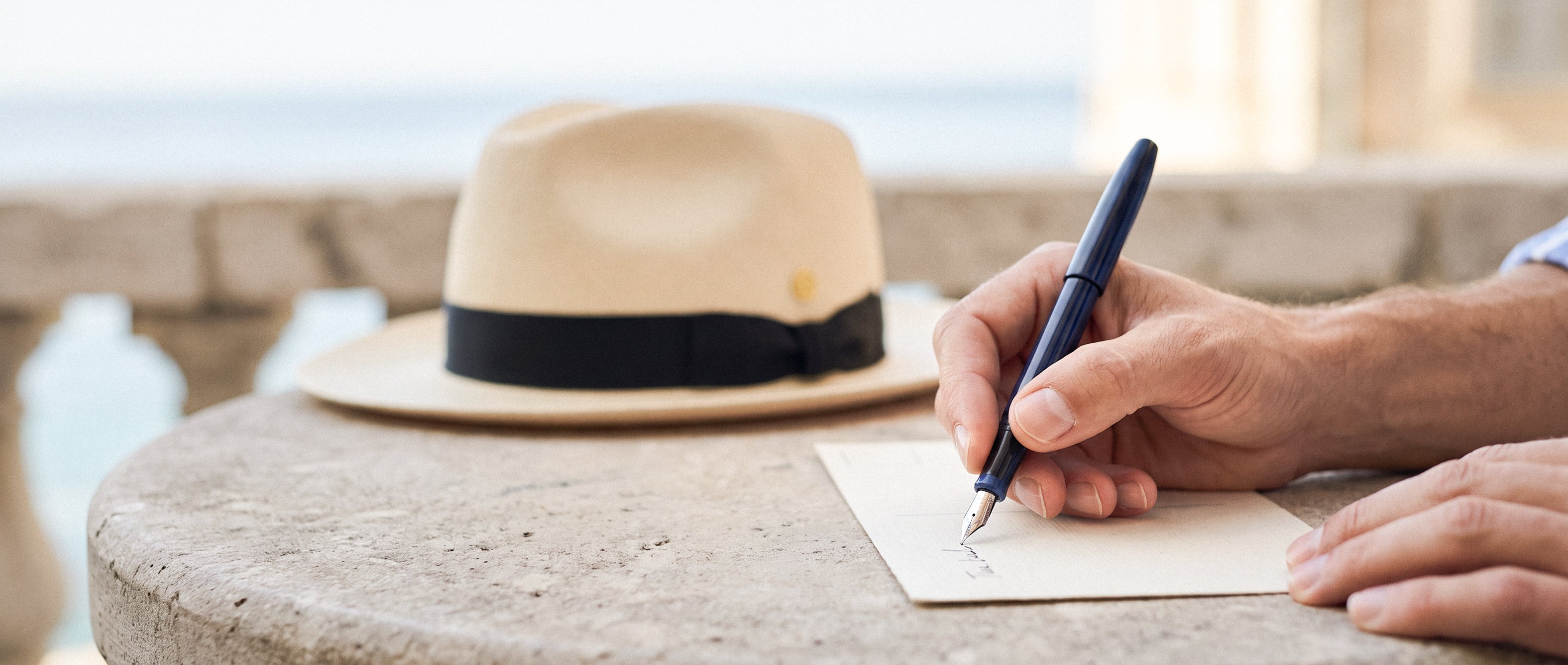
A Panama hat is one of the most iconic summer hats in the world. Lightweight, breathable, elegant, and timeless, it has been worn by travelers, leaders, artists, and style-conscious customers for generations.
But despite its name, a true Panama hat is not originally from Panama. It is traditionally made in Ecuador from the fibers of the toquilla palm. The name “Panama hat” became popular because these hats were shipped through Panama and famously worn there, especially during the construction of the Panama Canal.
At JJ Hat Center, we have helped customers understand and appreciate fine hats since 1911. One of the questions we often hear is: How is a Panama hat made? The answer is simple in concept, but remarkable in practice: a true Panama hat is handwoven from natural straw through a process that requires patience, skill, and tradition.
What Is a Panama Hat Made From?
A genuine Panama hat is made from toquilla straw, a natural fiber harvested from the toquilla palm, which grows in Ecuador. The quality of the straw plays a major role in the final look and feel of the hat.
Fine toquilla straw is:
-
Lightweight
-
Flexible
-
Breathable
-
Naturally elegant
-
Comfortable in warm weather
The better the straw and the finer the weave, the more refined the Panama hat will be.
Step 1: Harvesting the Toquilla Straw
The process begins with the toquilla palm. Young palm shoots are carefully harvested and prepared by skilled workers. The leaves are split into thin fibers, which will later be woven by hand.
The fineness of these fibers matters. Thinner, more consistent fibers allow for a smoother, tighter, and more elegant weave.
This is one of the first signs of quality in a Panama hat: the better the raw material, the better the finished hat can become.
Step 2: Preparing and Drying the Straw
After harvesting, the straw is boiled or treated to soften and prepare the fibers. It is then dried carefully, often in the open air. This step helps give the straw its light color, flexibility, and workability.
The straw may also be sorted by color, texture, and thickness. Consistency is important because a premium Panama hat should have a balanced, even appearance.
Step 3: Hand-Weaving the Hat Body
The heart of Panama hat making is the weaving. A true Panama hat is woven by hand, usually beginning at the center of the crown and working outward.
The weaver gradually builds the hat body, carefully interlacing the straw fibers to create the crown and brim. This process can take days, weeks, or even months depending on the fineness of the weave.
A simple Panama hat may be woven relatively quickly. A very fine Panama hat requires far more time, patience, and skill.
This is why two Panama hats can look similar from a distance but feel very different in quality when held side by side.
Step 4: Finishing the Edge
Once the hat body is woven, the loose straw fibers around the brim must be finished. This can involve trimming, tightening, and securing the edge so the hat body is stable and ready for shaping.
The edge work is an important detail. A clean, well-finished brim is part of what separates a quality Panama hat from a basic straw hat.
Step 5: Washing, Bleaching, and Drying
After weaving, the hat body is cleaned and often lightened to create the classic Panama hat appearance. Depending on the desired finish, the straw may be washed, naturally lightened, or carefully treated.
The goal is to create a clean, refined color while preserving the natural character of the straw. A premium Panama hat should never feel overly stiff or artificial. It should remain light, breathable, and comfortable.
Step 6: Blocking the Panama Hat
Once the woven hat body is ready, it is shaped over a hat block. Blocking gives the Panama hat its final form, such as a fedora, optimo, gambler, or classic wide-brim shape.
During blocking, the crown is shaped and the brim is pressed or formed into the desired style. This step requires precision. The same woven body can look completely different depending on the block, crown shape, brim width, and finish.
A classic Panama fedora, for example, often features a center crease, side dents, and a medium brim. An optimo Panama has a distinctive ridge running along the crown, giving it a more traditional travel-inspired appearance.
Step 7: Trimming the Hat
After shaping, the Panama hat receives its final details. These may include:
-
A grosgrain ribbon
-
A bow
-
A sweatband
-
A lining, depending on the style
-
A finished brim edge
-
Subtle brand details
The ribbon is one of the most recognizable features of a Panama hat. A black ribbon on natural straw is classic, but Panama hats can also feature brown, navy, tonal, or seasonal ribbon colors.
The trimming should complement the hat, not overpower it. A premium Panama hat is often defined by balance, proportion, and restraint.
Step 8: Final Inspection
Before a Panama hat is ready to wear, it must be inspected for shape, weave, finish, color, and comfort. A quality hat should feel light but structured, elegant but practical.
Important details include:
-
Is the weave even?
-
Is the brim shaped correctly?
-
Is the crown balanced?
-
Is the ribbon placed cleanly?
-
Is the sweatband comfortable?
-
Does the hat hold its shape?
-
Does it feel natural when worn?
A well-made Panama hat should look effortless, but that effortless appearance comes from many careful steps.
What Makes a Panama Hat Premium?
The quality of a Panama hat depends on several factors, including the fineness of the straw, the tightness of the weave, the skill of the weaver, and the quality of the finishing.
Premium Panama hats often have:
-
Finer, more consistent straw
-
A tighter and more even weave
-
Better flexibility
-
Cleaner finishing
-
More refined shaping
-
A lighter, more elegant feel
-
Greater comfort in warm weather
A finer Panama hat is not simply about appearance. It is about the time and craftsmanship required to create it.
Why Are Panama Hats So Popular?
Panama hats remain popular because they offer a rare combination of elegance and practicality. They are breathable enough for warm weather, refined enough for dressier occasions, and classic enough to never feel out of style.
A Panama hat can be worn with:
-
Linen suits
-
Summer tailoring
-
Casual shirts
-
Resort wear
-
Lightweight jackets
-
Dresses
-
Everyday warm-weather outfits
Few hats move so easily between casual and sophisticated settings.
How Long Does It Take to Make a Panama Hat?
The time required depends on the quality and fineness of the weave. A simpler Panama hat may take a few days to weave, while a very fine Panama hat can take several weeks or even months.
That time is one reason premium Panama hats are so valued. They are not rushed products. They are the result of patience, tradition, and handwork.
Final Thoughts
A Panama hat is made through a careful process that begins with toquilla straw and ends with a beautifully shaped, wearable piece of craftsmanship. From harvesting and preparing the straw to hand-weaving, blocking, trimming, and finishing, every step matters.
A true Panama hat is light, breathable, elegant, and full of history. It is one of the finest examples of how natural materials and human skill can create something timeless.
Since 1911, JJ Hat Center has helped customers discover hats with quality, character, and purpose. A well-made Panama hat is more than a summer accessory. It is a classic that carries tradition in every weave.